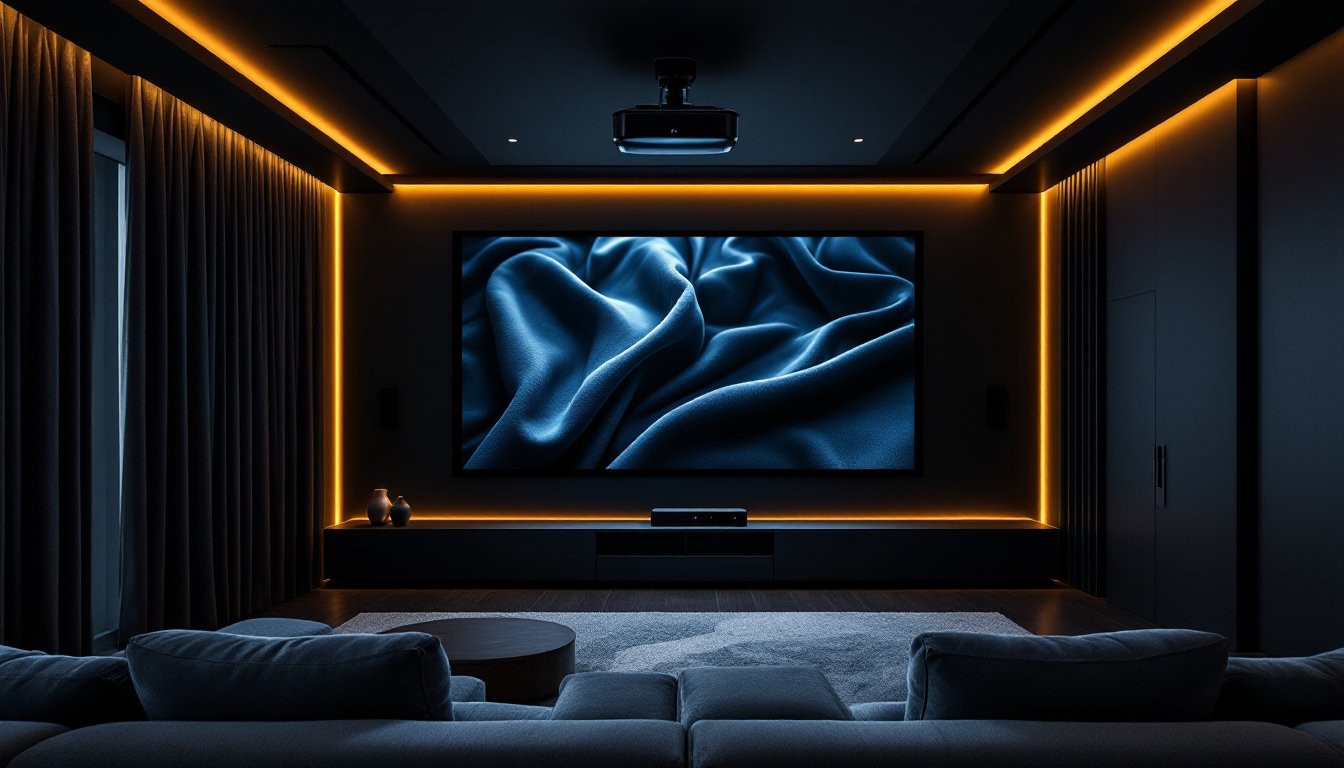
Setting up a home theater feels like a luxury reserved for someone else’s budget, until you start looking at modern 4K projectors. A quality 4K home theater projector can turn your living room or basement into a cinema that rivals the multiplex, and the technology has become more accessible than ever. Whether you’re planning your first home theater laser projector setup or upgrading from an older model, understanding what separates a solid projector from a game-changing one makes the difference between a purchase you’ll regret and an investment you’ll enjoy for years. This guide walks you through the essentials: what makes 4K projectors worth the investment, which features actually matter, and how to set up your room for success.
Table of Contents
ToggleKey Takeaways
- A 4K home theater projector delivers 3,840 × 2,160 pixel resolution and HDR processing for sharp details, deeper blacks, and cinematic immersion on screens 100+ inches without quality loss.
- Laser projectors outperform traditional lamp-based models with 25,000+ hour lifespan, superior brightness retention, and lower heat/noise, making them the premium choice for dedicated home theater installations.
- Room preparation is critical: block ambient light with blackout treatments, secure ceiling mounts to joists with proper hardware, select a quality projection screen, and ensure 12+ inches of ventilation clearance for projector longevity.
- Brightness requirements depend on room conditions—1,500–2,500 lumens for dark, controlled spaces; 3,000+ lumens for rooms with ambient light—and throw distance must match your layout to avoid keystoning and image distortion.
- Professional calibration of focus, lens shift, and color balance after installation is essential to maximize the 4K projector’s visual potential and protect your investment.
Why 4K Projectors Transform Your Home Theater Experience
A 4K projector isn’t just a bigger TV, it’s a fundamentally different viewing experience. Native 4K resolution means 3,840 × 2,160 pixels, delivering detail that standard 1080p or 2K projectors simply can’t match. When you’re sitting 10 or 15 feet from a 100+ inch screen, that extra clarity becomes obvious. The best 4K projector for home theater gives you razor-sharp text on lower thirds, visible texture in fabric, and film grain that feels intentional rather than fuzzy.
Beyond resolution, modern 4K home theater projectors incorporate HDR (High Dynamic Range) processing, which means brighter highlights, deeper blacks, and a wider color gamut. You’ll notice this immediately in streaming content, Blu-ray, and gaming. A home theater laser projector 4K option uses laser light sources instead of traditional lamps, they stay bright longer (25,000+ hours vs. 3,000–5,000 for lamps), maintain color accuracy over time, and produce less heat and noise. The upfront cost is higher, but the lifespan and performance justify it for dedicated home theater rooms.
The cinematic impact comes down to screen size and immersion. A 4K home theater projector lets you go bigger, 120, 150, even 200 inches, without losing sharpness, which isn’t practical with smaller televisions. That scale transforms how you experience films, sports, and games.
Key Features to Look for in a 4K Home Theater Projector
Not all 4K projectors are created equal. When shopping for a 4K projector for home theater, prioritize features that directly affect your viewing experience.
Brightness and Contrast Ratings
Brightness is measured in lumens: contrast is the ratio between the brightest and darkest pixels. For a dedicated dark home theater room, 1,500–2,500 lumens is typically enough. If your room has ambient light or you plan to use it during the day, jump to 3,000+ lumens. Contrast ratios above 30,000:1 give you deeper blacks, which matters more in a light-controlled environment than in a bright room.
Laser projectors maintain brightness and color accuracy better over time than lamp-based models. Many home theater laser projector 4K units achieve 3,000+ lumens with superior contrast, making them the premium choice for serious installations. Look at the ANSI lumen rating, that’s the standardized measurement, not the inflated “peak” claims some manufacturers advertise.
Lens Quality and Throw Distance
Throw distance is how far the projector sits from the screen. A short-throw lens projects a 100-inch image from 8–10 feet away: a standard lens needs 15–20 feet. If your room is cramped, a short-throw 4K projector for home theater is essential. If you have the space, a standard throw often costs less and delivers sharper corners.
Optical quality matters just as much as resolution. A poor lens with high chromatic aberration (color fringing at edges) and soft focus corners will disappoint you. Mid-range and premium models from established manufacturers, think brands with strong reputation in home theater, include motorized focus and lens shift, which makes installation easier and more precise. The best 4K projector for home theater balances throw distance flexibility with optical sharpness.
Installation and Room Setup Considerations
Installing a 4K home theater projector is less about carpentry and more about geometry and environmental control. Get the basics wrong, and even a $5,000 projector will disappoint.
Room Prep and Light Control
Your viewing room should block ambient light as much as possible. Paint walls flat black or dark gray, glossy finishes cause reflections. Use blackout curtains or cellular shades behind your screen. If you’re using a wall-mounted or ceiling-mounted projector, install it centered on the screen axis: angled projection causes keystoning (a trapezoidal image) that’s hard to correct without image quality loss.
Ceiling and Wall Mounting
For ceiling mounts, locate ceiling joists, they’re spaced 16 or 24 inches on center in most homes. Use lag bolts or through-bolts (depending on joist depth and your projector’s weight, typically 10–20 lbs) to secure the mount bracket. A standard stud finder with joist detection makes this easier. Wall mounts work too if your screen is mounted below: just ensure the projector’s throw distance allows for proper image placement.
Screen Selection
A quality projection screen is as important as the projector itself. White or light-gray screens preserve color and brightness: darker screens increase contrast but require more lumens. Flat screens work, but slight curves (especially in larger sizes) improve edge sharpness. For a 4K home theater projector, use a screen with perforations or weave tight enough that speakers and other equipment behind it don’t create reflections or hot spots.
Audio and Content Delivery
A projector is visual, pair it with proper audio. A dedicated home theater receiver, soundbar, or surround setup transforms the experience. Cable management matters: route HDMI 2.1 cables (they support 4K at 60fps) cleanly, and keep signal cables away from power cables to minimize interference. Modern streaming platforms and 4K Blu-ray players ensure content keeps up with your hardware. Home automation reviews and smart home technology guides often discuss integrated AV systems that simplify control of projectors, screens, and lighting.
Cooling and Ventilation
Projectors generate heat. Ensure the unit has 12+ inches of clearance on all sides for airflow. If ceiling-mounted, don’t enclose it in a tight soffit, dead air around the lens trap heat and reduce lifespan. In warmer climates or rooms without air conditioning, consider laser models, which run cooler than lamp-based projectors.
Calibration
Once installed, calibrate the projector’s focus, lens shift, and color balance. Most units include test patterns: some require a colorimeter for professional accuracy. Home improvement tools and hands-on DIY tutorials often cover calibration basics. Take time here, a blurry or color-shifted image ruins the 4K advantage.
Conclusion
A best 4K projector for home theater delivers cinema-quality images and scalable screen sizes that elevate your entire entertainment space. Success hinges on three pillars: choosing a projector with adequate lumens, contrast, and optical quality for your room: selecting a throw distance that fits your layout: and preparing your space with proper light control, mounting stability, and audio support. Start with your room’s constraints, how far can the projector sit from the screen, and how much ambient light can you control, then let those answers guide your feature priorities and budget. The result is a home theater that justifies the investment every time you use it.