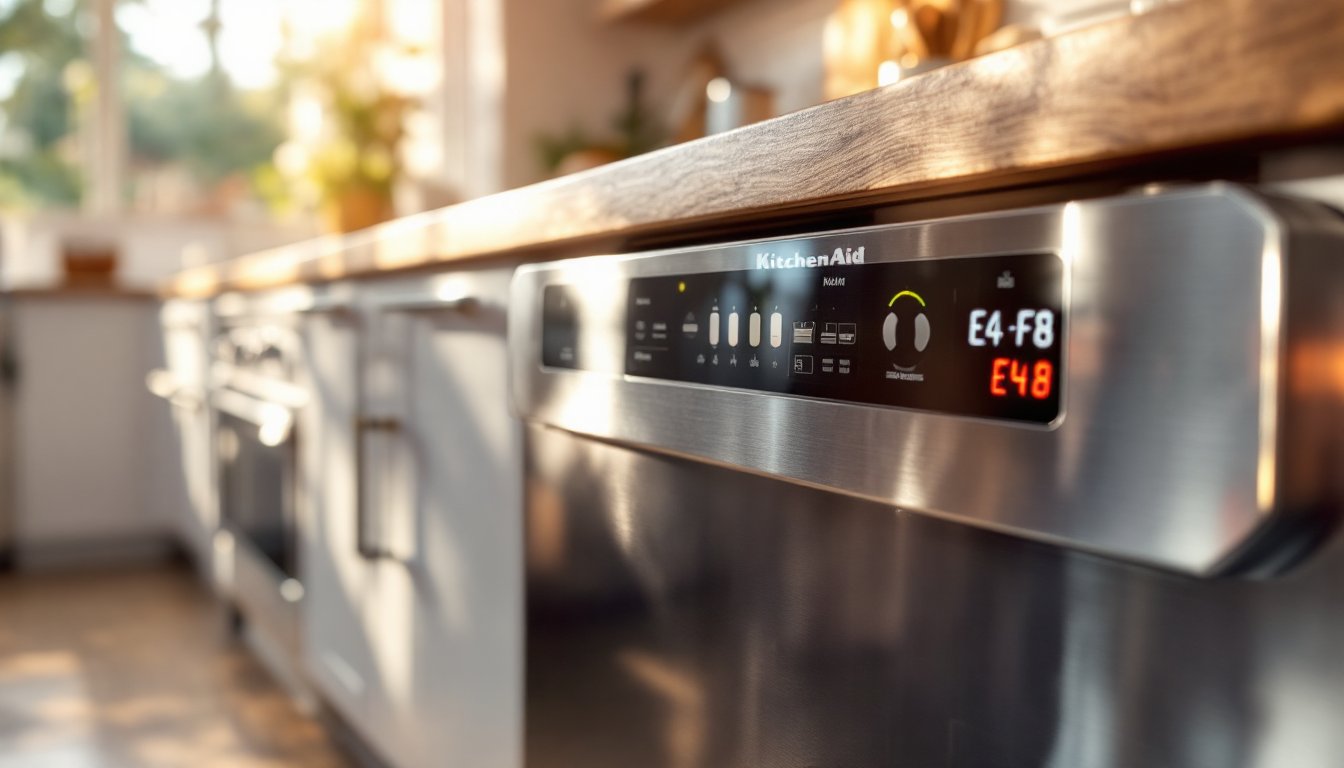
A flashing E4 F8 error code on your KitchenAid dishwasher can derail your kitchen routine fast. Unlike random beeps, this code signals a real problem, usually tied to water flow or drainage, that won’t resolve itself. The good news: most causes are fixable without calling a technician. Whether it’s a kinked hose, a clogged filter, or a sensor hiccup, you’ve got options. This guide walks you through what the error means, what typically triggers it, and how to troubleshoot it step by step. You’ll learn when a fix is within your DIY wheelhouse and when to bring in a pro.
Table of Contents
ToggleKey Takeaways
- The E4 F8 error on a KitchenAid dishwasher indicates a water fill or drain fault, signaling that water isn’t filling or draining as expected during the wash cycle.
- Most E4 F8 errors stem from common, fixable issues like kinked hoses, clogged inlet screens, clogged drain filters, or low water pressure—all addressable without professional help.
- Clean the drain filter monthly (or weekly with heavy use) and straighten the drain hose to prevent the most preventable causes of E4 F8 errors.
- If troubleshooting steps don’t resolve the E4 F8 error, the issue likely involves internal components like the fill valve solenoid or pressure switch, requiring a professional technician.
- Annual inlet hose inspections, monthly cleaning cycles with commercial dishwasher cleaner, and door gasket maintenance help prevent future E4 F8 errors and extend your KitchenAid dishwasher’s lifespan.
What Does the E4 F8 Error Code Mean?
The E4 F8 error on a KitchenAid dishwasher indicates a water fill or drain fault. More precisely, the machine is detecting that water isn’t filling or draining as expected during the wash cycle. The E4 code typically points to an issue with water intake or level sensing, while the F8 suffix narrows it down to a fill-time fault, meaning the dishwasher isn’t reaching the proper water level within the expected timeframe.
This isn’t a sensor glitch you can ignore. The machine will refuse to cycle further until the problem is resolved. Your dishes stay unwashed, and the dishwasher sits locked. The code exists to protect the motor and heating element from running dry or with insufficient water, which would damage both.
Common Causes Behind the E4 F8 Error
Water Supply Issues
The most common culprit is a water supply interruption or restriction. Check whether the inlet valves, those small solenoid valves that control water flow into the machine, are fully open and receiving water pressure. A kinked fill hose, accidentally closed valve under the sink, or a clogged inlet screen will starve the dishwasher of water.
KitchenAid inlet screens are small mesh filters that catch mineral deposits and debris. Over time, hard water buildup or sediment clogs them, and the dishwasher can’t fill. You can inspect and clean these without special tools.
Low water pressure in your home’s supply line also triggers the error. If your home is undergoing plumbing work, or if a main shutoff was recently adjusted, this could be the cause. Test by running a tap elsewhere in the kitchen, if the flow is weak, the issue is upstream.
Drainage Problems
Water can’t fill if it can’t drain from the previous cycle. A clogged drain filter or kinked drain hose traps standing water in the tub, and the float switch, a small plastic device that monitors water level, prevents refilling until the tub empties.
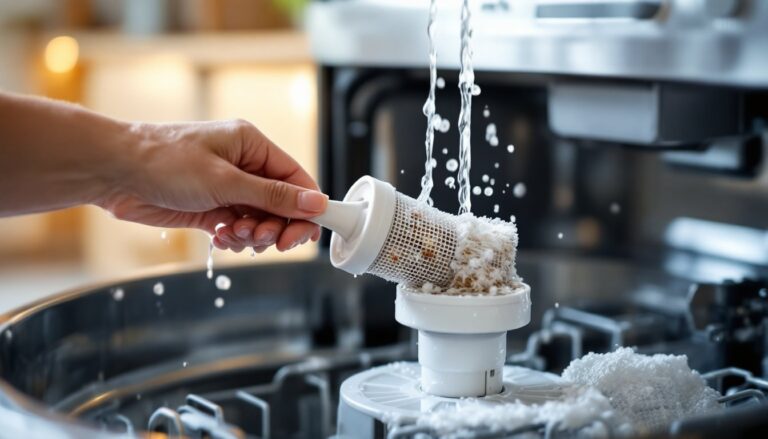
The drain filter sits at the bottom of the tub and collects food debris and grease. Most KitchenAid models have a removable cylindrical filter that needs rinsing every month under normal use. Heavy-use kitchens should clean it weekly.
The drain hose, typically a rubber tube running behind or under the dishwasher, can kink if the machine was recently moved or if clutter is pressing against it. A sharp bend pinches the line and blocks water from exiting. The dishwasher senses trapped water and won’t fill for the next cycle.
Step-by-Step Troubleshooting Guide
Before you start, turn off power to the dishwasher at the circuit breaker or unplug it if it has a plug. Never work on the machine while it’s powered.
-
Inspect the inlet hose. Locate the fill hose where it connects to the water supply under your sink. Check for kinks, crimps, or pinches along its entire length. Straighten any bends. Look for cracks or holes, a damaged hose must be replaced, not patched.
-
Check the water shutoff valve. The small knob or lever on the supply line under the sink should be fully open (handle parallel to the pipe). Turn it counterclockwise if it’s partially closed.
-
Clean the inlet screen. Close the shutoff valve, disconnect the inlet hose from the valve, and locate the small mesh screen inside the hose connection. Rinse it under running water or soak it in white vinegar for 30 minutes to dissolve mineral deposits. Use an old toothbrush to gently scrub if needed. Reattach the hose and reopen the valve.
-
Empty and rinse the drain filter. Open the dishwasher door, look at the bottom center of the tub, and locate the cylindrical filter. Twist it counterclockwise and remove it. Rinse under warm running water, scrubbing away any grease or debris. Replace it and twist clockwise until snug, don’t overtighten.
-
Straighten the drain hose. Slide the dishwasher out gently (use furniture sliders if it’s heavy) and trace the drain hose to where it connects to your sink’s drain or garbage disposal. Look for sharp bends or compression points. Reposition hoses so they have gentle curves, not kinks.
-
Run a test cycle. Turn the power back on, close the door, select a short cycle, and start. Watch for the error to reappear. If water fills normally and drains afterward, the issue is resolved.
If the E4 F8 error persists after these steps, the problem may involve internal components like the fill valve solenoid or the pressure switch, both repairs that require technical expertise.
When to Call a Professional
Know your limits. If you’ve completed the troubleshooting steps above and the error returns, or if you discover a cracked inlet hose or clogged drain line you can’t reach, it’s time to call a technician. Many dishwasher problems look simple but involve electrical components or sealed systems that aren’t DIY-friendly.
Also call a pro if you lack comfortable access to the space behind your dishwasher, or if you’re unsure how to safely disconnect and reconnect plumbing. A licensed appliance repair technician has diagnostic tools to pinpoint failures in the fill valve, float switch, or pressure sensor. They can also advise whether a repair makes financial sense versus replacement, newer KitchenAid models perform better than older ones, and repair costs sometimes exceed half the price of a new unit.
Professional repairs typically cost $150–$400 for service calls and parts, depending on your region and what’s failing. It’s worth the investment to avoid water damage from a faulty inlet valve or a flooded kitchen.
Preventing Future E4 F8 Errors
Maintenance is cheaper than repairs. Rinse your drain filter monthly, or weekly if your household runs the dishwasher daily. Food and grease buildup is the most preventable cause of drain issues.
Wipe the rubber gasket around the door after every few loads. Mold and mineral deposits here don’t trigger error codes directly, but they trap debris that eventually clogs the drain. A damp cloth takes 30 seconds.
Run a cleaning cycle once a month using a commercial dishwasher cleaner, these products dissolve mineral buildup inside the tub and spray arms. Vinegar works in a pinch: run an empty cycle with a cup of white vinegar on the top rack.
Check your inlet hose annually for visible cracks or soft spots. Most hoses last 5–7 years before rubber fatigue sets in. If you see discoloration or bulging, replace it before it fails and floods your cabinets. Replacement hoses cost $15–$40 at appliance parts suppliers.
If you have hard water (mineral-rich), consider installing a water softener or at least flushing the inlet screen twice yearly instead of once. Mineral deposits accelerate clogging on the E4 F8 error-prone KitchenAid dishwasher models.