
A hand-mixed cake looks fine until you compare it side-by-side with one made in a KitchenAid mixer. The difference isn’t just cosmetic, it’s about consistent texture, proper aeration, and baked goods that turn out the same way every time. Whether you’re a casual weekend baker or someone who’s serious about precision in the kitchen, a KitchenAid cake mixer removes guesswork from the mixing process. These heavy-duty stand mixers have become staples in home kitchens for good reason: they handle the heavy lifting, fold ingredients evenly, and save your arms from hours of manual work. If you’ve been wondering whether investing in one makes sense for your baking habits, this guide walks you through what sets them apart, how to choose the right model, and how to get the best results from your mixer.
Table of Contents
ToggleKey Takeaways
- A KitchenAid cake mixer delivers consistent texture, proper aeration, and reliable results batch after batch compared to hand-mixing or handheld options.
- Choose between tilt-head designs for compact kitchens or bowl-lift designs for heavy-duty mixing and larger capacities, depending on your baking habits.
- Opt for a mixer with 5+ quarts capacity and 400+ watts of power if you bake bread regularly or mix large batches for optimal performance.
- Room-temperature ingredients, proper speed settings (starting low and increasing gradually), and mid-mix bowl scraping ensure the best results from your KitchenAid cake mixer.
- A KitchenAid stand mixer pays for itself through time savings, durability of 10+ years, and reduced failed batches thanks to reliable, repeatable mixing action.
- Basic maintenance—hand-washing attachments, monthly checks for snug fittings, and annual gearbox lubrication—keeps your mixer running smoothly for decades.
What Makes KitchenAid Cake Mixers Stand Out From Other Mixing Options
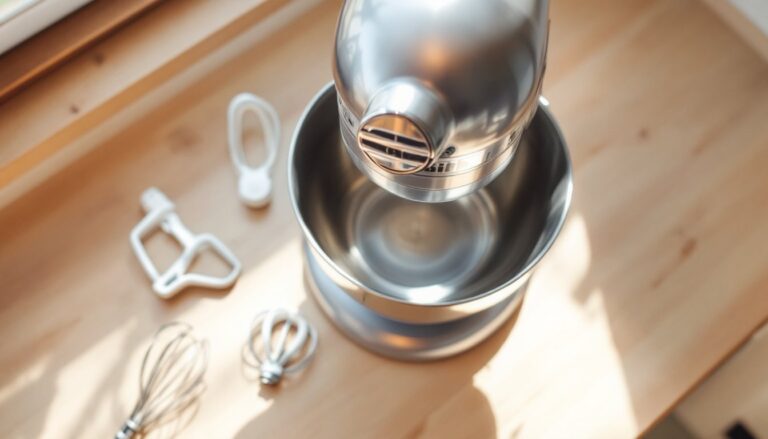
Stand mixers aren’t a new invention, but KitchenAid’s design has stayed dominant for decades because it solves real problems that handheld and bowl-based mixers don’t. A KitchenAid stand mixer keeps your hands free while it works, which means you can prep additional ingredients, measure dry goods, or adjust the mixing speed without pausing. The three-part mixing action, the flat beater, dough hook, and wire whip, handles everything from cake batter to stiff doughs to delicate meringues with the right attachment for each task.
Compare this to a handheld electric mixer: those work for small batches, but your arm gets tired, they don’t mix as evenly around the bowl’s sides, and you can’t walk away. Bowl-style mixers like the older hoosier cabinets look vintage and beautiful, but they lack the power and speed control of a modern stand mixer. A KitchenAid delivers consistent results batch after batch because the bowl rotates while the beater stays anchored, ensuring every ingredient gets incorporated fully. The motor runs at multiple speeds, so you can cream butter and sugar gently or whip egg whites to stiff peaks without overworking them.
Why Invest in a KitchenAid Mixer for Your Home Baking
The upfront cost of a KitchenAid mixer ranges from around $200 for an entry-level model to $500+ for commercial-grade versions, which stops some people in their tracks. But consider the durability: KitchenAid stands are built to last 10+ years with regular use, and many people own the same one for decades. The time savings alone add up fast, whipping cream takes 2 minutes instead of 10, and creaming butter dissolves from a shoulder workout into something you set and forget.
There’s also the consistency angle. Bakers who rotate batches (cookies for a bake sale, a three-layer wedding cake, bread dough for the week) know that hand-mixing introduces variables, how hard you mix, whether you get tired halfway through, whether the bottom of the bowl stays incorporated. A mixer removes that variable. Professional bakers and test kitchen designers (like those at Good Housekeeping) rely on stand mixers specifically because results are replicable. For home bakers serious about improving their craft, that reliability translates to fewer failed batches and more confidence trying ambitious recipes.
Key Features to Look For When Choosing Your KitchenAid Model
Not all KitchenAid mixers are identical, and choosing the right one depends on your kitchen space and what you’ll actually bake. Start by thinking about capacity and power, these two factors will shape which model makes sense for your needs.
Tilt-Head vs. Bowl-Lift Designs: Which Is Right for Your Kitchen
KitchenAid makes two main design styles, and each has trade-offs. The tilt-head model (like the Classic or Deluxe series) has a bowl that stays fixed while the head tilts back to access it. This saves counter space, the mixer’s footprint is compact, and you can reach the bowl without sliding the whole unit. The tilt-head is lighter, usually quieter, and simpler to clean around. It’s ideal for smaller kitchens or if you plan to store the mixer in a cabinet between uses.
The bowl-lift design (like the Artisan or Commercial series) has a stationary head and a bowl that lifts up and down on a post. This design is sturdier for heavy-duty mixing and generally supports larger bowl capacities. Bowl-lift mixers handle stiffer doughs better because the structure is more rigid, the motor doesn’t have to fight against the weight of the mixing head tilting. If you bake bread regularly or mix large batches, bowl-lift is worth the extra counter space. Kitchn enthusiasts and kitchen design resources often recommend bowl-lift models for serious bakers because they’re more stable under heavy load.
Capacity and Power Considerations for Consistent Baking Results
Mixer capacity ranges from 3.5 quarts (about 14 cups flour equivalent) on smaller models to 8+ quarts on commercial units. A 3.5- to 5-quart mixer handles most home baking: cakes, cookies, small bread doughs, and whipped cream. If you bake multiple layers or double recipes frequently, aim for 5+ quarts. Don’t just look at the stated capacity, check the usable capacity, which is typically 60-70% of the bowl’s total volume. A mixer can hold 5 quarts technically but safely mix only 3 without overflow.
Motor power matters too, measured in watts. Entry-level KitchenAid mixers run around 250-300 watts, which is fine for cakes and cookies but may struggle with stiff bread doughs. Models with 400+ watts handle dough mixing more smoothly and heat up less during extended use. Speed settings also vary: basic models have 6 speeds, while higher-end units offer 10. The extra speeds let you cream butter at lower speeds (preventing splashing and overworking) and adjust for different mixing tasks. Think about what you’ll bake most, and match the capacity and power to that realistic use case rather than buying the “fanciest” model and never using its features.
Getting Started: Tips for Using Your KitchenAid Cake Mixer Effectively
Unboxing and assembly takes 10-15 minutes. Snap the bowl into place, attach the flat beater (for cakes and general mixing), and plug it in. Let the mixer sit at room temperature for an hour before first use if it’s been in a cold environment, condensation inside can affect the motor.
When mixing cakes, start with room-temperature ingredients. Cold butter and eggs mix unevenly and trap air poorly. Use the flat beater for most cake batters, which moves around the bowl perimeter while scraping sides thoroughly. Start at speed 1 for 20-30 seconds to incorporate dry goods, then increase to speed 4-6 for creaming or incorporating wet ingredients. Avoid maxing out the speed immediately, it spatters and doesn’t mix better than a moderate speed. For meringues or whipped cream, use the wire whip, which incorporates air efficiently. Start at speed 4-6 and let it run until you see stiff peaks forming, then stop. Overwhipping happens fast at high speeds. Always scrape the bowl sides with a spatula halfway through mixing to ensure no streaks of unmixed flour or butter remain at the bottom, the mixer won’t catch those automatically.
Maintenance and Care to Keep Your Mixer Running Smoothly
A KitchenAid mixer requires minimal maintenance but deserves basic care to stay reliable for years. After each use, unplug the mixer and remove the bowl, beaters, and hooks. Wash these parts by hand (most aren’t dishwasher-safe, though some newer models have that option, check your manual). Wipe the mixer head and base with a damp cloth, but don’t submerge them. Dry everything thoroughly before storing.
Every 3-6 months, check that all attachments fit snugly and that the bowl locks securely. If mixing becomes noticeably noisier or the motor seems to labor more than usual, the gearbox may need lubrication, KitchenAid sells a food-grade lubricant specifically for this. Don’t force attachments into the drive socket: if they don’t seat easily, stop and recheck the alignment. For deeper cleaning, Better Homes & Gardens and manufacturer guides recommend removing the coil spring guard under the bowl and wiping out any flour dust buildup inside the mechanism once a year. Keep the power cord coiled loosely (not tightly wound) to prevent internal stress. If your mixer starts smelling burnt or stops working, contact KitchenAid support or a local small-appliance repair shop, most home centers don’t repair these, and shipping can be expensive, so professional local service often makes sense if the mixer is under 10 years old.