Cooked bacon is a pantry staple for quick breakfasts, salads, and sandwich toppings, but like any leftover protein, it needs proper storage to stay safe. Whether a homeowner has batch-cooked a full pound for the week or has a few strips left from Sunday brunch, knowing how long cooked bacon lasts in the refrigerator is essential for food safety and meal planning. Temperature, packaging, and storage conditions all play a role in extending shelf life. This guide walks through the specifics: recommended timelines, best storage practices, spoilage signs, and freezing strategies. The goal is simple, keep that bacon fresh and ready to use, or recognize when it’s time to toss it.
Table of Contents
ToggleKey Takeaways
- Cooked bacon lasts 4 to 5 days in the refrigerator when stored properly and refrigerated within 2 hours of cooking, according to USDA guidelines.
- Cool cooked bacon to room temperature before sealing it in an airtight container or freezer-safe zip-top bag to prevent mold and condensation.
- Store cooked bacon in the coldest part of your refrigerator (back of the bottom shelf) at 40°F or below, and always label it with the cooking date.
- Discard cooked bacon if it shows signs of spoilage such as a sour smell, slimy texture, mold, or gray-greenish discoloration.
- Freeze cooked bacon the same day it’s prepared for extended storage of 3 to 4 months, then thaw in the refrigerator overnight before reheating.
- When in doubt about whether cooked bacon is safe to eat, throw it out—the risk of foodborne illness is not worth the cost of a few strips.
Recommended Storage Timeline for Cooked Bacon
Cooked bacon lasts 4 to 5 days in the refrigerator when stored properly, according to USDA guidelines. This timeline assumes the bacon was cooked, cooled, and refrigerated within 2 hours of cooking (or 1 hour if the kitchen temperature is above 90°F). The clock starts the moment a homeowner seals the container: after day 5, the risk of bacterial growth rises significantly, and bacon should be discarded.
The 4-to-5-day window is a safe baseline for most households. But, a few variables can shorten or extend this slightly. If bacon was left on the counter for longer than 2 hours before refrigeration, the timeline begins sooner. Conversely, if stored in the coldest part of the refrigerator (the back of the bottom shelf, where temps hover near 32–35°F), it may hold for an extra day or two, but don’t rely on that buffer. When in doubt, err on the side of caution.
For perspective, raw bacon lasts about 7 days unopened and 4 to 5 days once opened. Cooked bacon has a shorter window because cooking doesn’t sterilize the meat entirely, and exposed surfaces are more vulnerable to spoilage organisms once cooled. Freezing, but, extends shelf life dramatically, up to several months, and is the best option for bacon a homeowner knows won’t be used within the week.
Best Practices for Refrigerating Cooked Bacon
Proper storage starts before the bacon ever hits the fridge. Most bacon failures stem from skipping one of two steps: cooling or packaging.
Proper Cooling and Packaging Methods
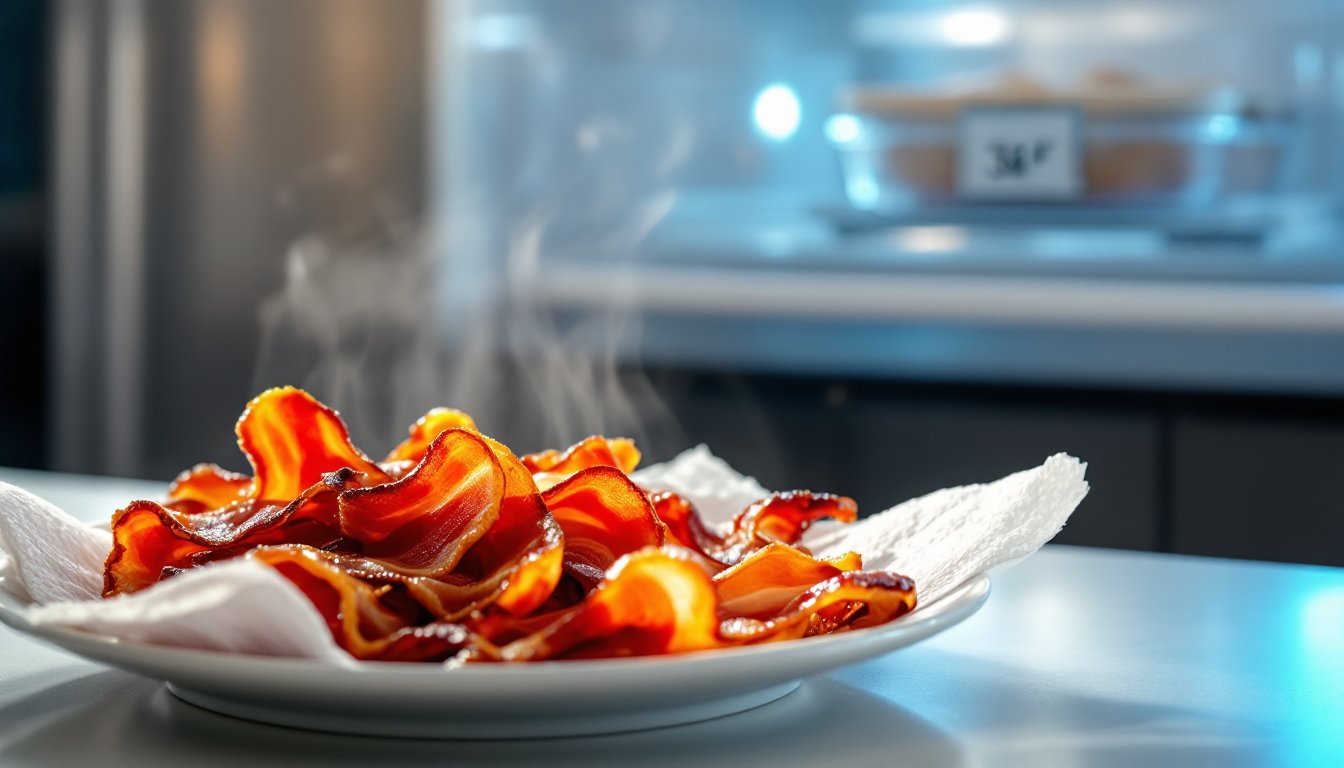
Allow cooked bacon to cool to room temperature before packaging, never seal warm bacon in a container. Hot food creates steam inside the container, which promotes condensation and mold growth. Place bacon on a paper towel or wire rack immediately after cooking to shed excess grease. Once cooled (about 15–20 minutes), transfer it to an airtight container, a freezer-safe zip-top bag, or wrap it tightly in parchment paper, then aluminum foil.
The key is minimal air contact. Oxygen accelerates rancidity, so squeeze as much air as possible from zip-top bags before sealing. If using a container, opt for glass or BPA-free plastic with a tight-fitting lid. Paper towels can stay with the bacon to absorb residual moisture, they won’t affect safety. Don’t use plastic wrap alone: it allows some air infiltration over days and doesn’t create a true seal.
For stack storage, lay bacon strips flat rather than crumpled: this maximizes surface area for even cooling and makes it easier to grab a few strips without thawing the entire batch.
Optimal Refrigerator Storage Conditions
Store cooked bacon in the coldest zone of the refrigerator, typically the back of the bottom shelf or a dedicated deli drawer if the fridge has one. Avoid the door, where temperature fluctuates every time it opens and typically runs 5–10°F warmer than the main compartment. Maintain a fridge temperature of 40°F or below (check with a refrigerator thermometer: many fridges drift warmer without the owner realizing it).
Keep bacon away from raw proteins to prevent cross-contamination, and store it below ready-to-eat items. Label the container with the date it was cooked or refrigerated so there’s no guessing three days in. This small step, a piece of masking tape and a permanent marker, prevents accidental consumption of spoiled bacon.
How to Tell If Cooked Bacon Has Gone Bad
Spoiled bacon usually signals itself clearly. The most obvious sign is a sour or off smell, any odor beyond the normal smoky-salty bacon aroma means it’s time to throw it out. Trust the nose: it’s a reliable first line of defense.
Other red flags include visible mold, slimy texture, or a gray or greenish color change (as opposed to the normal brown or reddish-brown of cooked bacon). Discoloration can occur naturally as the pigments oxidize, so color alone isn’t a dealbreaker, but a combination of discoloration plus a funky smell is a sure sign of spoilage. Bacon that’s been refrigerated for more than 5 days should be discarded even if it looks and smells acceptable, foodborne pathogens like Listeria can grow without obvious signs.
Bacterial growth accelerates in the “danger zone” (40–140°F). If bacon has been left on the counter for more than 2 hours (or 1 hour in hot weather), or if a homeowner suspects temperature abuse in the fridge, it’s safer to toss it. The cost of a few strips of bacon is far less than a food poisoning incident. When in doubt, throw it out, that old saying exists for a reason.
Freezing Cooked Bacon for Extended Storage
Freezing is the best strategy for batch-cooked bacon a homeowner won’t use within 4 to 5 days. Properly frozen cooked bacon keeps for 3 to 4 months, and can hold even longer if stored in a deep freezer that maintains a constant 0°F.
Freeze bacon the same day it’s cooked, following the cooling and packaging steps outlined above. Lay strips flat in a single layer on a baking sheet, cover them loosely with plastic wrap, and freeze for 1 to 2 hours until solid. Then transfer them to a freezer-safe zip-top bag, label with the date, and return to the freezer. This prevents strips from sticking together in a frozen clump, so a homeowner can grab a few pieces without thawing the entire batch.
Alternatively, wrap cooled bacon loosely in parchment paper in bundles of 2 to 4 strips, then place bundles in a zip-top freezer bag. This method is also convenient for quick thawing.
To thaw, move bacon from the freezer to the refrigerator the night before use, it’ll be ready by morning and safe to eat within the normal 4-to-5-day window. Never thaw bacon at room temperature, as this encourages bacterial growth. Thawed bacon can be reheated in the oven at 350°F for 8–10 minutes until warm and slightly crispy, or in a skillet over medium heat. Microwaving works too but tends to make bacon soggy.
Conclusion
Cooked bacon is a convenient protein, but it demands respect in storage. Keep it refrigerated at 40°F or below, sealed in an airtight container, and use it within 4 to 5 days. When batch cooking for the week, freeze what won’t be eaten within that window, it’s a simple step that prevents waste and ensures a homeowner always has breakfast ready. A quick smell test and visual check are the final safeguards. Follow these guidelines, and cooked bacon will stay safe, fresh, and delicious.