Keeping chicken fresh in the refrigerator is a cornerstone of safe meal planning and food storage. Whether someone’s prepping for the week or just brought groceries home, knowing how long chicken lasts prevents foodborne illness and cuts down on waste. The USDA provides clear guidelines on safe storage times, but the reality involves understanding the difference between raw and cooked chicken, recognizing spoilage signs, and mastering proper storage techniques. This guide walks through the essentials so homeowners can confidently keep chicken safe to eat.
Table of Contents
ToggleKey Takeaways
- Raw chicken stays safe in the refrigerator for 1 to 2 days when stored at 40°F or below, while cooked chicken lasts 3 to 4 days.
- Store raw chicken on the lowest shelf of your refrigerator to prevent cross-contamination with ready-to-eat foods and fresh produce.
- How long chicken can stay in the refrigerator depends on temperature control—use a simple thermometer to ensure your fridge maintains the safe 40°F zone.
- Spoiled chicken shows three clear warning signs: sour smell, gray or brown discoloration, and slimy texture—when in doubt, throw it out.
- Freeze raw chicken for 9 to 12 months or cooked chicken for 2 to 3 months by removing air and labeling containers with the date for extended storage.
Safe Storage Time for Raw Chicken
Raw chicken lasts 1 to 2 days in the refrigerator when stored correctly, according to the USDA. This applies to whole birds, breasts, thighs, wings, and ground chicken alike. The clock starts the moment chicken arrives home or is unwrapped from the butcher counter.
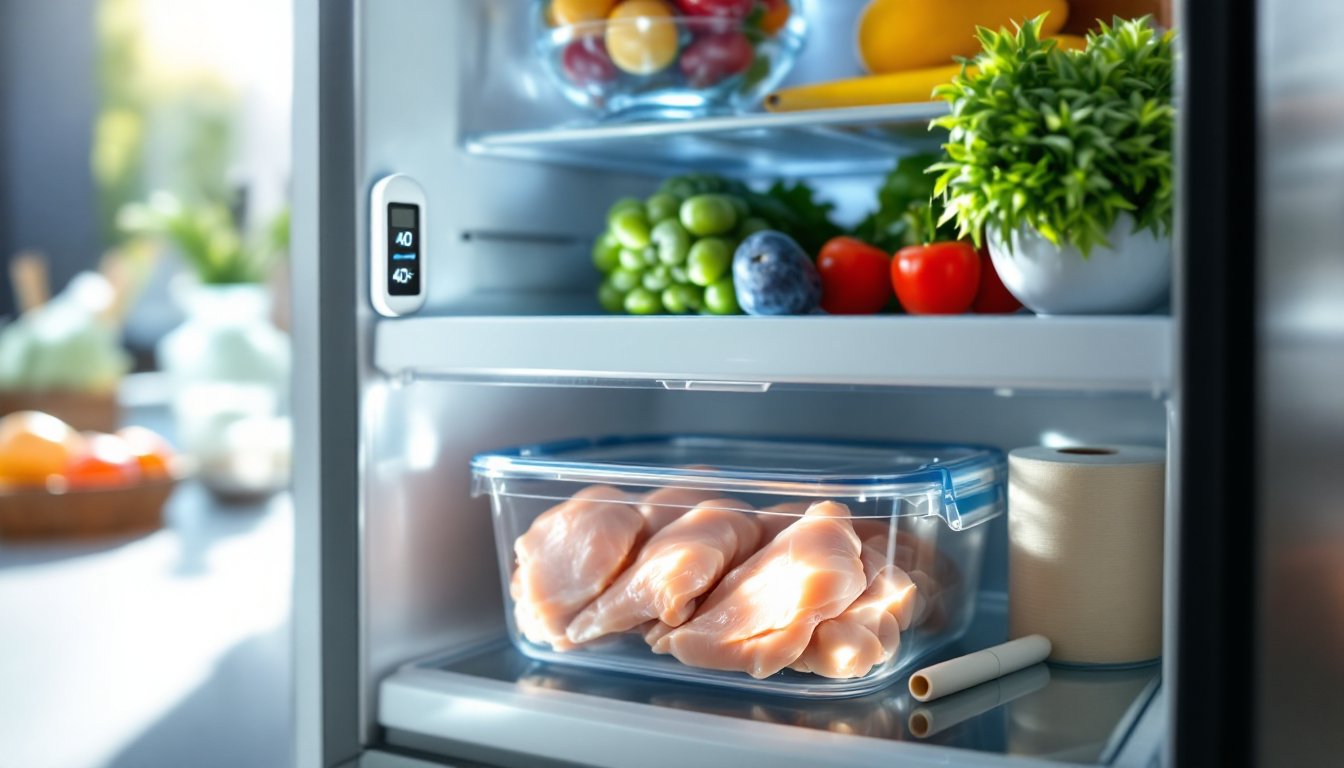
Temperature control is critical. The refrigerator must maintain a constant 40°F (4°C) or below. A simple refrigerator thermometer, available for under $10, confirms the temperature stays in the safe zone. If the fridge sits warmer than 40°F, chicken spoils faster and bacteria multiply rapidly.
Placement matters too. Store raw chicken on the lowest shelf of the refrigerator, away from ready-to-eat foods. This prevents raw juices from dripping onto vegetables, bread, or other items. Place chicken on a plate or in a container to catch any leaks. Never let raw chicken touch cooked food or fresh produce.
Packaging affects storage time slightly. Vacuum-sealed chicken from the store lasts the full 1–2 days. Butcher-wrapped chicken in paper may last 1–2 days as well, though paper is less protective than plastic. If planning to cook within one day, standard store packaging works fine. For longer storage within that 1–2 day window, transfer chicken to an airtight container or wrap it tightly in plastic wrap or foil.
Safe Storage Time for Cooked Chicken
Cooked chicken keeps for 3 to 4 days in the refrigerator at 40°F or below. This includes roasted whole birds, grilled breasts, baked thighs, and any chicken dish prepared hot and cooled.
Timing starts after cooking. Cool cooked chicken to room temperature before refrigerating, don’t leave it out for more than 2 hours. On a hot day (above 90°F), that window shrinks to 1 hour. Once cooled, transfer chicken to an airtight container or cover it tightly with plastic wrap or foil. An airtight container keeps chicken moist and prevents odors from spreading to other foods.
Cooked dishes with sauces or mixed ingredients (like chicken salad, casseroles, or curries) also last 3–4 days. The sauce doesn’t extend storage time, but it does help retain moisture. Chicken salad made with mayonnaise should be consumed sooner, within 3 days, since mayo has its own freshness window.
When in doubt about exact cooking time, mark containers with the date prepared. A simple piece of tape and a marker takes seconds and prevents confusion later. Leftover chicken that’s been sitting unopened for exactly 4 days is still technically safe, but it’s better to enjoy it fresh.
Signs Your Refrigerated Chicken Has Gone Bad
Spoiled chicken gives three clear warning signs: smell, appearance, and texture. Trust instinct, if something seems off, don’t cook or eat it.
Smell is the strongest indicator. Fresh raw chicken has a mild, neutral odor. Spoiled chicken smells sour, sulfurous, or distinctly unpleasant. Open the container: if an off-odor hits immediately, the chicken isn’t safe. Cooked chicken should smell like the dish it was prepared in (garlic, spices, etc.). A sour or rotten smell means bacteria have colonized the meat.
Color changes signal spoilage too. Raw chicken should be pale pink with white fat. Gray, brown, or greenish discoloration means bacteria are breaking down the meat. Cooked chicken may naturally darken slightly over a few days, but should still look appetizing. If it appears dull, gray, or develops dark spots, don’t use it.
Texture turns slimy when spoiled. Fresh raw chicken feels slightly moist but firm. If it becomes slimy or sticky, bacteria are thriving. Cooked chicken shouldn’t feel mushy or fall apart when handled. A slimy surface is a red flag regardless of age.
Foodborne pathogens like Salmonella and Campylobacter don’t always leave obvious signs, so it’s safer to follow storage times than to rely on appearance alone. When in doubt, throw it out. Chicken costs less than a doctor’s visit.
Best Practices for Storing Chicken in Your Refrigerator
Proper storage extends chicken’s shelf life and reduces cross-contamination risk.
Temperature and Location:
Keep the refrigerator at 40°F (4°C) or below. Place raw chicken on the lowest shelf, below all ready-to-eat foods. This prevents drips from contaminating other items. Use a dedicated shelf or area if possible.
Containment:
Store raw chicken in a shallow container, wrapped tightly in plastic wrap, or in its original packaging if unopened. The container should catch any liquid. For cooked chicken, use airtight containers, glass with locking lids or plastic bins designed for food storage. These keep chicken fresh longer and prevent odor transfer.
Prep for Faster Cooking:
Cut or portion chicken before storing if planning to use it soon. Smaller pieces thaw faster and cook more evenly. Pat raw chicken dry with paper towels before storing: excess moisture invites bacterial growth. Discard the paper towels immediately.
Organization and Labeling:
Arrange the fridge so chicken is visible and easily accessible. Mark containers with the date prepared or purchased. This prevents accidentally using old chicken. Keep frequently accessed items at eye level: older items toward the back.
Separate Storage for Marinades:
If marinating raw chicken, use a dedicated container or a heavy zip-top bag. Never reuse the marinade on cooked chicken unless it’s been boiled for at least 1 minute to kill pathogens. Better yet, reserve some fresh marinade before adding raw chicken to it.
Freezing Chicken for Extended Storage
Freezing extends chicken’s shelf life from days to months, making it perfect for meal planning and reducing food waste.
Freezing Raw Chicken:
Raw chicken stays safe in the freezer for 9 to 12 months at 0°F (-18°C) or below. Wrap it tightly in plastic wrap, then foil, or use heavy-duty freezer bags. Remove as much air as possible to prevent freezer burn, ice crystals that degrade flavor and texture. Vacuum-sealed bags work exceptionally well. Label with the type of chicken and the date frozen.
Freezing Cooked Chicken:
Cooked chicken lasts 2 to 3 months in the freezer. Cool it completely before packaging. Use airtight containers or freezer bags: cooked chicken packed with sauce freezes better than plain meat. Remove air before sealing.
Thawing Safely:
Thaw chicken in the refrigerator, never on the counter. A package of breasts may thaw overnight: a whole bird takes 1 to 2 days, depending on size. Plan ahead so thawing time doesn’t derail dinner. In a pinch, thaw raw chicken using the cold-water method: seal it in a bag and submerge in cold water, changing the water every 30 minutes. This takes 1 to 2 hours. Cook thawed chicken within 1 to 2 days.
Skip the Thaw?
Raw chicken can go straight from freezer to oven or stovetop. Add 50% more cooking time. Use a meat thermometer to ensure the center reaches 165°F (74°C) before eating. Cooked frozen chicken can be reheated directly, in the microwave, oven, or stovetop, without thawing first.
Conclusion
Chicken is a kitchen staple, but it demands respect when it comes to food safety. Raw chicken lasts 1–2 days: cooked chicken, 3–4 days. Freeze for longer storage. Keep the fridge at 40°F, store chicken on the lowest shelf, and watch for spoilage signs. These simple practices prevent illness and waste. When in doubt, throw it out, chicken is replaceable: health isn’t.