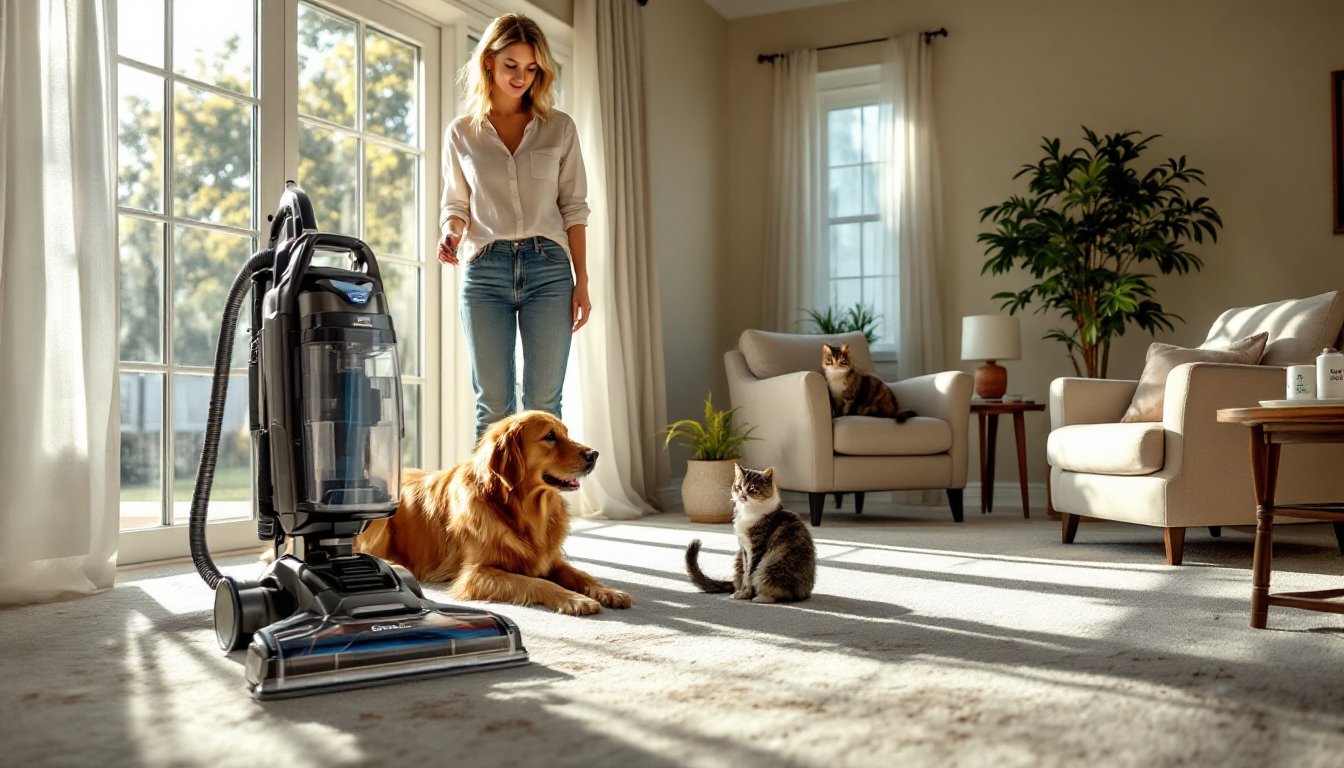
Pet owners know the struggle: muddy paws, accident stains, and lingering odors are just part of daily life with dogs and cats. Standard carpet cleaners often fall short because they’re not equipped to handle the unique challenges pets create. A pet-specific carpet cleaner targets pet stains, removes odors at the source, and uses formulas safe for curious noses and paws. Whether you’re dealing with fresh messes or years of buildup, choosing the right machine makes the difference between a carpet that smells fresh and one that harbors bacteria and allergens.
Table of Contents
ToggleKey Takeaways
- Pet-specific carpet cleaners use enzymatic formulas and stronger suction to eliminate odors at the source by breaking down urine and organic compounds at the molecular level, preventing temporary masking of smells.
- The best home carpet cleaner for pets should feature at least 3–5 amps of suction power, heat water to 200°F or higher, and include a 12-inch cleaning head for efficient coverage and faster drying.
- Look for pet-safe, enzymatic cleaning solutions that avoid harsh chemicals like perchloroethylene, which can irritate your pet’s paws and respiratory system.
- Upright hot-water extraction machines are ideal for multi-pet households and deliver professional-grade results ($400–$800), while portable spot cleaners ($150–$400) work well for quick touch-ups between deep cleans.
- Deep clean your carpets every 3–6 months depending on pet density, and blot fresh accidents immediately with paper towels or a wet/dry vacuum to prevent odor compounds from setting into carpet fibers.
- After cleaning, ensure carpets dry completely within 8 hours by opening windows or using fans, as damp carpet breeds bacteria and reactivates odor-causing compounds.
Why Pet-Specific Carpet Cleaners Matter
Pet accidents aren’t just surface-level stains. When urine soaks into carpet fibers and the padding underneath, it bonds with proteins and breaks down into ammonia and other compounds that create persistent odors. A standard carpet cleaner using only water and mild detergent won’t break these molecular bonds, it’ll mask the smell temporarily, only for it to return days later.
Pet-specific carpet cleaners are formulated with enzymatic cleaners or specialized surfactants designed to break down urine, feces, and organic matter at the molecular level. These machines also typically feature stronger suction and heating systems to extract moisture and trapped bacteria more effectively. For homeowners with multiple pets or chronic odor problems, this difference is substantial and worth the investment.
Beyond odor, pet hair embeds itself deep into carpet pile. Regular vacuuming pulls surface fur, but a pet carpet cleaner with robust brush rolls and extraction power lifts hair from the base of fibers, reducing allergens and the matted appearance that comes with high pet traffic.
Key Features to Look for in a Pet-Friendly Carpet Cleaner
Stain and Odor Removal Power
The cleaning path width matters, a 12-inch cleaning head is standard for upright machines and covers ground faster than narrower models. Look for machines with at least 3 to 5 amps of suction power: this spec tells you how forcefully the machine extracts water and debris. Higher suction means faster drying, which is critical because wet carpet invites mold and mildew.
Heat is your ally against odors. Machines that heat water to 200°F or higher break down organic compounds more effectively than cool-water alternatives. Some pet-specific models include a pre-treat mode or spot-cleaning feature separate from the main tank, letting you apply concentrated formula directly to problem areas before running a full clean.
Check the solution capacity, tanks between 1.5 to 2 gallons let you cover 2,000+ square feet before refilling, which saves time on larger jobs. The clean water tank should be easy to access and empty: some models have warning lights when tanks are full, preventing overflow mid-clean.
Pet-Safe Cleaning Solutions
Not all carpet cleaning solutions are safe for pets. Avoid cleaners with harsh chemicals like perchloroethylene (common in dry-cleaning products) or excessive surfactants that can irritate paws and respiratory systems. Look for products labeled enzymatic cleaners or those specifically marketed as pet-safe.
Enzymatic formulas use naturally occurring proteins to target and break down urine and organic stains. These work slower than chemical-heavy alternatives but are gentler on pets and the environment. Some manufacturers offer fragrance-free or pet-friendly scent options: if you add a scent, make sure it’s designed for pet households and won’t stress cats with sensitive olfactory systems.
Always test a solution on a hidden carpet section first. Pet reactions vary, some cats and dogs may tolerate standard cleaners fine, while others show sensitivity. A quick spot test prevents a costly or uncomfortable reaction.
Top Carpet Cleaning Methods for Pet Owners
Upright Hot Water Extraction (HWE) machines are the gold standard for pet-heavy households. These units heat water on demand, mix it with cleaning solution, spray it into carpet fibers, and extract it with powerful suction. The dual-tank system keeps clean solution separate from dirty water, ensuring consistent cleaning performance. Models like those reviewed by professional cleaning experts deliver results comparable to professional services and typically cost $400–$800 for quality residential models.
Portable or compact spot cleaners work well for quick cleanups and targeting specific stains. They’re lighter and easier to store than uprights but less powerful, ideal for supplementing regular vacuuming rather than deep cleaning entire rooms. These run $150–$400 and are perfect for apartments or homes with limited storage.
Robotic or automatic cleaners are emerging as a hands-off option, though they’re best viewed as a maintenance tool, not a replacement for deep cleaning. They work on schedule, keeping daily grime and light odors in check, but lack the suction and heated water of manual machines. If you go this route, combine it with quarterly deep cleans using an upright HWE machine.
For preventing recurring odors, run your chosen cleaner every 3 to 6 months depending on pet density. Homes with three or more pets benefit from quarterly deep cleans. Between professional cleans, blot fresh accidents immediately with paper towels or a wet/dry shop vacuum, the faster you remove moisture, the less time odor compounds have to set in.
Pro tip: After a deep clean, leave windows open or run fans to speed drying. Damp carpet is a breeding ground for odor-causing bacteria. If your carpet takes more than 8 hours to dry, you may need a machine with stronger suction or a larger clean water capacity. Many homeowners reference trusted guides and decorating resources for broader home maintenance tips alongside carpet care.
Conclusion
Choosing a pet-friendly carpet cleaner boils down to matching your household’s needs to the right machine. If you have multiple pets, persistent odors, or frequent accidents, invest in an upright hot water extraction machine, they deliver professional-grade results and pay for themselves after just a few professional cleaning sessions you won’t need to hire. For light touch-ups between deep cleans, a portable spot cleaner is a solid backup. Pair any machine with enzymatic, pet-safe solutions and a consistent cleaning schedule, and your carpets will stay fresher, longer.